
Wooden windows : What’s worth paying attention to
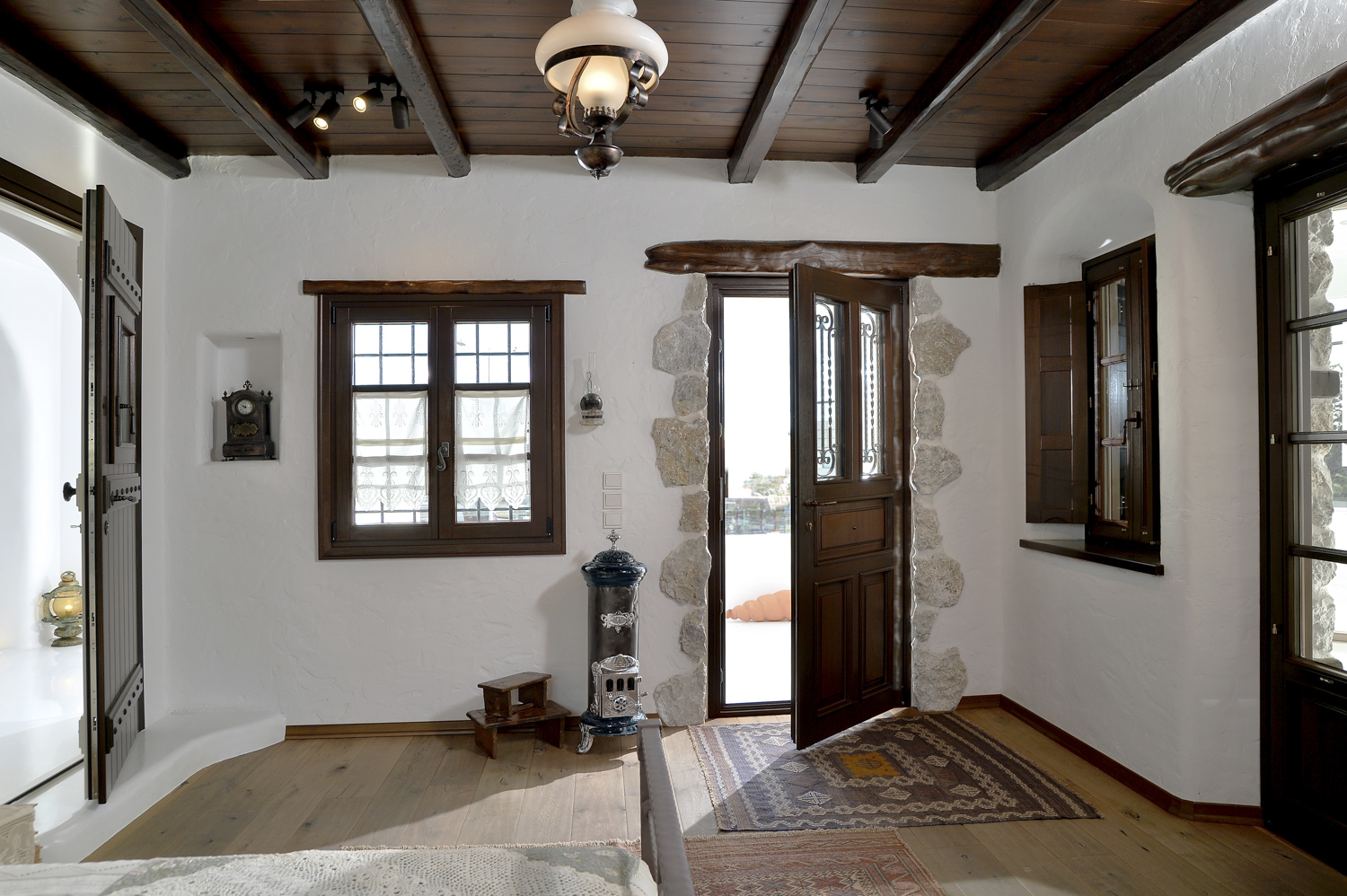
When a window frame looks right, it’s usually not just a matter of design. It’s the result of a series of technical choices that aren’t visible at first glance, yet determine on a daily basis the comfort, weatherproofing, acoustic performance, and overall appearance of the building. This is why wooden windows are not evaluated solely as an aesthetic element. They are evaluated as a construction system of high importance for the performance and value of the property.
In a high-demand residence or a demanding architectural project, a wooden window must simultaneously serve four goals: thermal protection, weatherproofing, security, and architectural coherence. When any one of these falls short, the overall quality of the result diminishes. This is why the choice should not be made based solely on first impressions or initial cost.
Why wooden windows remain a high-value choice
Wood has a particular advantage that is difficult to replicate with other materials. It combines natural aesthetics with real performance, provided the construction is properly engineered. In premium residential projects, renovations, and buildings with a strong architectural identity, wood is not chosen out of nostalgia. It is chosen because it offers character, depth, and proportion that are rarely matched with the same quality by standardized solutions.
At the same time, wood is a material with excellent thermal insulation properties. This does not mean that every wooden window is automatically efficient. Real performance depends on the cross-section, the method of construction, the sealing gaskets, the hardware, the glazing unit, and of course the installation. The material alone creates a strong foundation, but the final result is always the product of overall design.
What sets a quality wooden window apart
The difference between a merely beautiful frame and a truly high-specification system lies in the detail. And in this category, detail is not decorative — it is functional.
The quality of the timber and its processing
The correct choice of timber directly affects the stability, mechanical strength, and long-term behavior of the frame. The species of wood alone is not enough. Equally important are the quality of kiln-drying, the treatment, the lamination where required, and the overall precision of production. A well-crafted wooden frame should not exhibit deformations, instability, or an inability to adapt to environmental changes.
In coastal areas, mountain climates, or homes with intense sun and wind exposure, the demands increase. There, the quality of the raw material and proper industrial processing become even more critical.
Thermal insulation is not just about the glazing
The conversation often narrows to energy-efficient glass. That is a critical element, but not the only one. The thermal performance of a window frame depends on the interplay between the frame and the glazing unit as a unified system. The timber cross-section, any internal chambers, the weatherseals, and correct tolerances all play a decisive role.
A frame may carry a very good glazing unit but still fall short in airtightness or fit. In that case, the theoretical performance does not translate into real comfort. For the owner, this means energy losses, unpleasant drafts, and a lower quality of living.
Weatherproofing and acoustic insulation in practice
Weatherproofing is one of the areas where the seriousness of the construction is clearly evident. A proper wooden window frame must effectively protect against air and water infiltration — not only in mild conditions but also under demanding exposure. This requires precise joinery, quality hardware, and correct drainage design.
Acoustic insulation follows the same logic. It does not depend solely on the thickness of the glass. It is influenced by the cohesion of the entire system, from airtight fitting to the correct selection of glazing units based on the property’s location. A residence in an urban environment has different requirements from a country house or a boutique hotel.
Wooden frames and security
There is still a mistaken perception that wood excels only aesthetically. In practice, a modern wooden window can incorporate a very high level of security, provided it has been designed as such. The strength of the frame, the quality of multi-point locking hardware, the hinges, anti-burglary specifications, and the type of glazing are the elements that determine the result.
Security should not be approached in a piecemeal fashion. A reinforced lock mechanism is not enough if the overall construction does not follow a corresponding level of specification. In high-value residences and hospitality projects, a comprehensive approach is the only way forward.
The role of finishing in longevity
Finishing in wooden windows is an area where aesthetics and protection meet. Correct painting or varnishing does not serve only a decorative purpose. It protects the wood from moisture, solar radiation, and physical wear, while maintaining its stability and appearance.
There is no single answer for all cases here. A frame in an urban residence with limited exposure has different requirements from a seaside property or a historic building where aesthetic fidelity is paramount. The right finish is chosen based on the conditions of the project, not just based on a color swatch.
Where the investment is truly judged
In practice, the value of a window frame is judged over time. A more economical system may seem attractive at first, but can lead to compromises in the feel of operation, performance, maintenance, and ultimately the image of the property. A high-specification frame, by contrast, maintains its quality, supports the project’s architecture, and makes a meaningful contribution to the overall investment.
This is especially critical in residences where detail carries weight, as well as in projects that demand consistency across a wide range of openings, typologies, and custom constructions. The capacity for customization, the precision of production, and correct installation directly affect the final result.
What to consider before making your choice
The relationship between design and technical performance
The right frame should not force you to choose between aesthetics and performance. On the contrary, it must combine both. Slender profiles, correct proportions, opening options, and faithful integration into the building’s style must go hand in hand with thermal insulation, weatherproofing, and security.
The ability to support the project
Especially for architects, developers, and owners of demanding residences, it matters greatly that the company undertaking the project can support it from manufacturing through to installation. With wooden window frames, theoretical quality is not enough. What is required is consistency in execution.
Compatibility with the type of property
A contemporary single-family home, a traditional house, a historic building, or a hotel project do not share the same priorities. Different weight is given to minimalist lines, to the faithful reproduction of architectural features, and to the management of large openings. The right solution is always specific to the project.
In this context, companies with deep specialization in wood — such as HAUFEN® — offer a meaningful advantage: they do not approach the wooden window frame as one option among many in a general catalogue, but as a subject of technical knowledge and constructive responsibility.
The right choice is not only visible today
Wooden window frames have the ability to upgrade a property immediately, but their true value is proven over the years — in the feel of the space, in the consistency of operation, in the quietness, in protection from the elements, and in the preservation of architectural quality. When the choice is made on technical criteria rather than in haste, the result is not simply a beautiful opening. It is a construction element that serves the project with longevity and precision.