
Exterior Wooden Windows
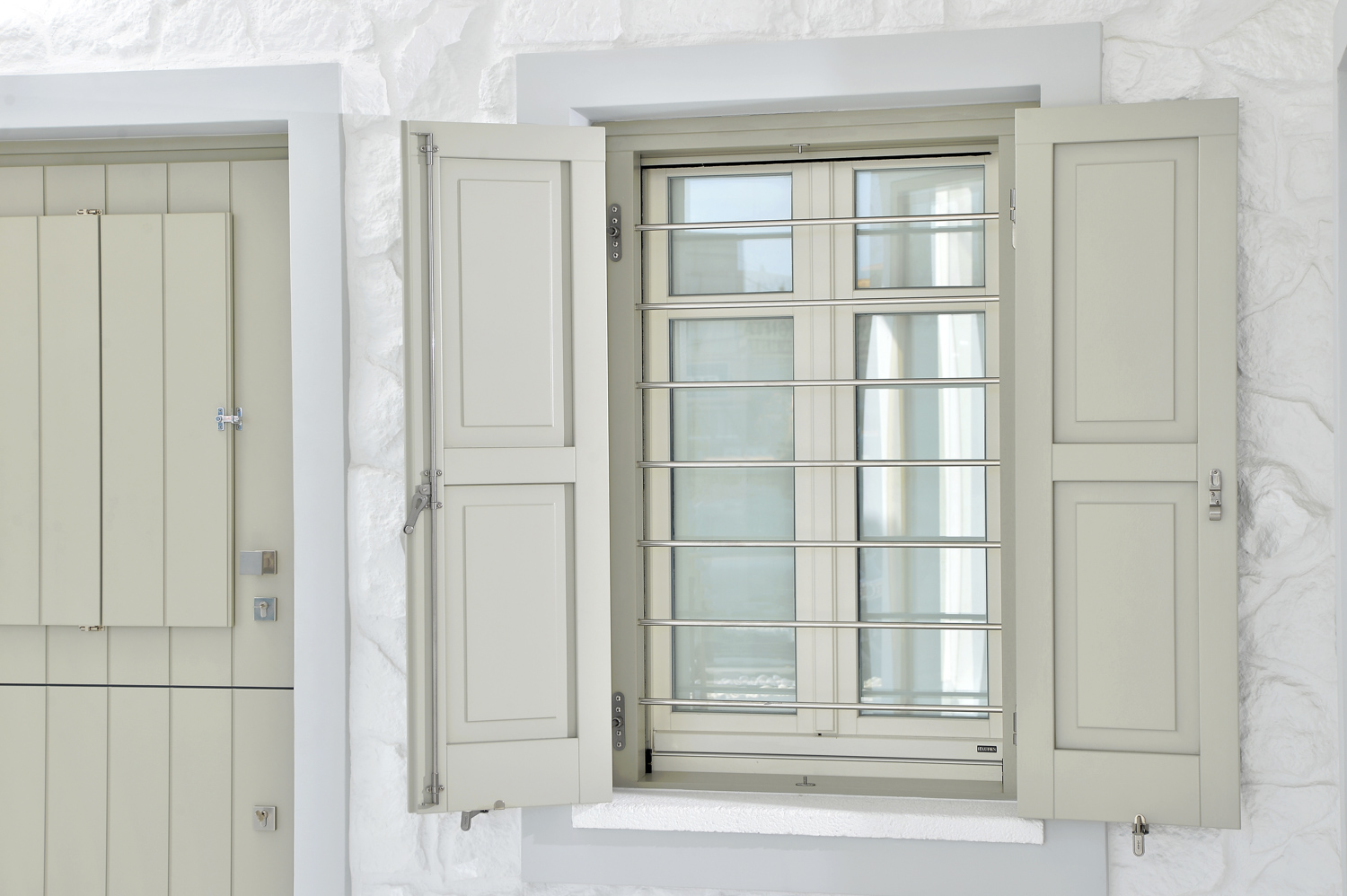
When a project calls for genuine architectural coherence, windows cease to be a secondary choice. Exterior wooden windows define thermal comfort, weatherproofing, sound insulation, and ultimately the character of the building. That is why the decision should not rest solely on appearance or initial price, but on overall long-term performance.
In high-demand residences, in vacation properties with intense sun and moisture exposure, and in restoration projects, wood holds a distinct position. It is not simply a traditional material. It is a construction solution with high adaptability, exceptional aesthetic integration, and a very real contribution to a building’s energy behavior — provided, of course, that its construction is properly engineered.
Why Exterior Wooden Windows Remain a Top Choice
Wood’s primary advantage is that it combines natural beauty with technical effectiveness. As a material, it has low thermal conductivity, making it an ideal basis for frames with very good insulating performance. Unlike more industrial solutions, it offers warmth in appearance and genuine flexibility in cross-sections, designs, and custom constructions.
This takes on particular significance in residences where detail is not decorative luxury but part of the property’s value. In a modern single-family home, a wooden window can support clean lines, large openings, and quality finishing. In a traditional building or a restoration project, it can accurately reproduce morphological characteristics that other materials struggle to serve convincingly.
There is, however, a critical distinction. Not all wooden frames perform equally. The difference lies not only in the type of timber, but in the methods of drying, lamination, treatment, painting, joinery, and final installation. A mediocre wooden frame does not represent the material’s potential — on the contrary, it highlights the limits of hasty craftsmanship.
What Determines Quality in Practice
Timber and its processing The right raw material is the starting point. The selected timber must have stability, durability, and appropriate moisture content, so that deformation over time is minimised. Tri-laminate timber, when produced to strict specifications, offers higher dimensional stability compared to simpler alternatives.
It is therefore not enough to simply name the species of wood. What matters is whether the material has been properly prepared for exterior use, whether it has undergone appropriate protection treatment, and whether the overall construction has been designed for real climatic stresses — not merely to look good in a showroom.
Cross-sections and energy glazing A high-specification exterior wooden window is not just wood — it is a composite system. The depth of the cross-section, the number and quality of the sealing gaskets, the multi-point locking mechanisms, and the energy-efficient glazing all directly affect overall performance.
In an era where energy upgrading is a substantive criterion, low-emission glazing, double or triple panes, and correct inter-pane spacing are not optional details. They are elements that determine whether an opening will contribute to a space’s thermal balance or act as a permanent weak point in the building envelope.
Paint system and surface finish Wood’s resistance to the outdoor environment depends greatly on the paint system. Protection against UV radiation, moisture, and temperature fluctuations must be multi-layered and uniform. This is precisely where the difference shows between a small workshop’s limited capabilities and an organised production line with consistent quality control.
The aesthetic result is equally significant. A quality finish must bring out the material without visually burdening it — whether in natural tones or opaque colours. The surface must remain stable and attractive not only in the first year, but after years of use.
Performance, Safety, and Everyday Use
Window choices are often made on the basis of appearance, but the experience of living in a space is judged elsewhere — in whether the window closes precisely, whether it remains stable over time, whether it reduces external noise, and whether it genuinely protects against wind and water. For the owner, these are everyday realities. For the architect or contractor, they represent the difference between a project that holds its value and one that develops problems prematurely.
Safety is equally critical. Modern exterior wooden windows can be fitted with advanced locking mechanisms, robust hardware, and appropriate safety glazing. Wood, when combined with sound mechanical engineering and quality peripheral materials, supports solutions that meet particularly demanding specifications.
There is also the question of maintenance, which is often presented in one-dimensional terms. Yes, wood requires care. No, this does not make it a problematic choice. In a high-quality product with the right finish and proper usage guidance, maintenance is predictable and entirely manageable. The real question is not whether care is needed, but whether the value it offers in aesthetics, insulation, and longevity justifies that care. For higher-end projects, the answer is usually clear.
When Exterior Wooden Windows Are the Right Choice
There is no single answer for every project. There are, however, cases where wood is clearly superior: in residences with high architectural demands, in seaside homes where the feel of the material carries weight, in mountain properties requiring thermal performance, and in historic or traditional buildings — wooden frames can deliver in ways few alternatives approach.
On the other hand, if the project’s logic is strictly economic and the decision is made solely on the basis of lowest initial cost, then the investment in a quality wooden system may not be properly utilised. Wood appeals primarily to those who evaluate the window frame as a lasting structural element, not as a disposable component of the project.
What to Ask Before Deciding
A proper evaluation requires specific information: cross-sections, certified performance ratings, glazing composition, the paint system, hardware mechanisms, and installation methodology. It is equally important to establish whether the manufacturer can support custom sizes, complex typologies, particular aesthetic requirements, and consistency in fitting.
On high-value projects, installation carries weight equal to manufacturing. An excellent window can be undermined by incorrect fitting, inadequate sealing, or poor integration with the masonry. This is why a holistic approach — from design through to execution — is a matter of substance, not merely an organisational advantage.
At this level of project, companies with deep specialisation in wood, such as HAUFEN®, are evaluated not only for their product but for their ability to manage the full construction requirement. This is particularly important when the result must combine high performance, precision of detail, and architectural coherence.
The Aesthetic Value That Is Hard to Measure
Some characteristics are recorded in tables and certifications; others are immediately perceptible in the experience of a space. Wooden windows belong to both categories. They deliver measurable performance, but simultaneously transform the feeling of a home in a way that technical terms alone cannot fully capture.
The texture, the naturalness, the precision of the construction, and the way the frame integrates into the architectural whole compose a value that endures. For the owner, this translates into quality of life. For the professional, it means a project with coherence and greater commercial and aesthetic durability over time.
If your choice is guided by long-term performance rather than short-term economy, then wooden frames deserve to be examined with the seriousness they merit. The right window does not simply complete the façade of a building. It supports it — every day, quietly, and in ways that truly matter.