
How to choose wooden windows
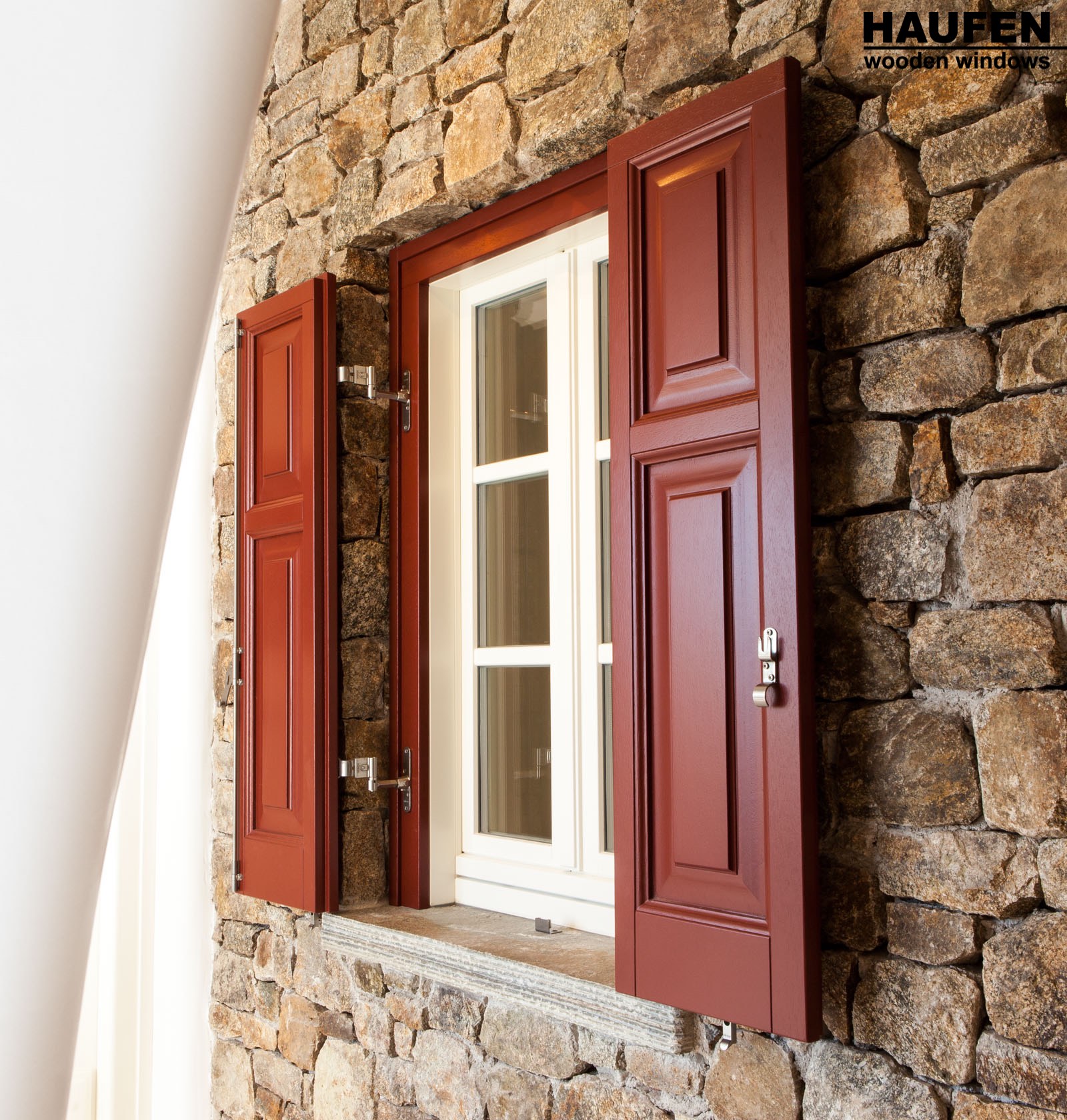
If the question is “how do I choose wooden windows,” the right answer is not found solely in the design or the shade of the wood. It lies primarily in the relationship between construction, performance, and the needs of the project itself. A high-specification frame is not evaluated as a standalone product, but as a critical part of the building envelope, affecting energy performance, the sense of comfort, sound insulation, security, and ultimately the overall value of the property.
How to choose wooden frames using the right criteria
The first mistake that is commonly made is basing the choice almost exclusively on appearance. Aesthetics are undeniably important, especially in high-demand residences, renovations, or architectural projects where wood plays a substantial role. However, the quality of a wooden frame is judged primarily by how it has been designed and constructed.
In practice, the right choice begins with five axes: the type and treatment of the timber, the cross-section and structure of the profile, the glazing units, the hardware, and the level of installation. If any one of these factors is lacking, the final result cannot truly be considered premium, however refined it may appear at first glance.
Timber is not a detail — it is the foundation of performance
In wooden frames, the raw material largely determines stability and service life. It is not enough for it to simply be “good wood.” The right species selection, proper drying, controlled moisture content, and processing that minimizes the risk of warping or cracking over time are all required.
In areas with intense sunlight, humidity, or a coastal environment, the demands are even higher. There, the durability of the wood and the quality of the finishing play a decisive role. A wooden frame can perform exceptionally well for many years, provided it has been built to specifications that take into account the actual environment of use and not a theoretical, ideal scenario.
The choice of timber also affects the aesthetic result. A clean, modern project with smooth surfaces has a different character from a traditional architectural residence or a historic building that demands fidelity to its original form. The right company does not propose a one-size-fits-all solution, but evaluates the project as a whole.
The cross-section and construction of the profile make the difference
A common point of misunderstanding is that all wooden frames belong to roughly the same category. In reality, the frame’s cross-section, the method of assembly, and the technical details of construction directly affect thermal insulation, weathertightness, and structural resistance.
Larger or more advanced cross-sections allow for better integration of modern glazing units and reinforced hardware, while simultaneously improving the stability of the system. This is particularly important in large openings, in balcony doors with heavy use, or in projects where a combination of slim lines and high performance is required.
It is not always necessary to select the heaviest or most complex series. In a smaller opening or a project with specific architectural constraints, a different technical solution may suffice. The right approach is to examine the suitability of the series for the specific building, rather than searching for a generally “better” profile.
Glazing units determine a large part of the energy performance
For those wondering how to choose wooden frames, it must be made clear that the glass is not a secondary element. The glazing unit contributes substantially to thermal and acoustic performance, as well as to security. A well-crafted wooden frame fitted with unsuitable glazing will not perform at the level it is capable of.
The choice here depends on the requirement. If thermal insulation is the priority, energy-efficient double or triple glazing units with appropriate coatings are considered. If the project is located in a noisy area, a specialized acoustic composition has value. If there are heightened security requirements, laminated or specially rated anti-burglary glazing units can be used.
Balance is needed here. Heavier glazing can raise performance, but it affects the overall weight of the sash and consequently the demands placed on the hardware and construction. This is why proper design study comes before the final selection.
Weathertightness, air permeability, and thermal insulation are not visible to the eye
Many of the critical characteristics of a frame are not visible in a showroom or in a photograph. The sense of quality is useful, but it is not enough. The result is judged in everyday use — when there is strong wind, rain, temperature fluctuations, and continuous opening and closing.
A quality wooden frame must offer a high level of water and air tightness, limitation of thermal losses, and reliable operation over time. Certifications, laboratory tests, and technical specifications carry genuine value, because they translate promises into measurable data.
For the homeowner, this means better comfort in winter and summer, lower energy demands, and fewer maintenance problems. For the architect or contractor, it means greater certainty that the result will live up to the project, even after handover.
Security is not exhausted by the lock
In external wooden frames, security is a combination of factors. It includes the structural resistance of the construction, the perimeter locking mechanisms, the hinges, and of course the appropriate glazing unit. When these function as a unified system, the frame acquires genuine anti-burglary behavior.
Security requirements differ from project to project. A primary residence in an urban setting has different needs from a country house that remains unoccupied for long periods, and both differ from a boutique hotel. The right solution is not the same for everyone, but it must always be treated as a technical matter and not as a simple addition of components at the end.
Finishing affects both appearance and long-term durability
In wood, the finish carries a dual significance. On one hand, it determines the final appearance, color accuracy, and the way in which the frame integrates into the architectural composition. On the other, it protects the material from solar radiation, moisture, and physical wear.
A quality finish is not just about the color selected. It concerns the entire process of preparation, impregnation, coating, and final protection. In high-aesthetic projects, this parameter becomes particularly important, because the surface must convey refinement without losing the natural character of the wood.
Installation is part of the product
Even the finest wooden frame can lose a significant portion of its performance if it is not installed correctly. The fitting to the opening, perimeter sealing, proper support, and functional check after installation are elements just as critical as the construction itself.
This is especially important in renovation projects, where openings may present deviations, pre-existing failures, or peculiarities of the existing structure. In such cases, experience in measuring and the technical competence of the installation team make a genuine difference to the final result.
When is it worth investing in high-specification wooden frames
The answer is straightforward: when the project is approached as a long-term investment and not as a short-term cost saving. High-specification wooden frames make sense when the goal is architectural quality, energy performance, durability over time, and the overall upgrading of the property.
This applies particularly to single-family homes, country residences, buildings of distinctive aesthetic character, and restoration projects where wood is not merely a material choice, but a fundamental element of identity. In these cases, the value of proper construction is evident not only in the present, but years later — in everyday use, in the appearance of the property, and in the stability of the investment.
For those seeking technically substantiated solutions with a focus on wood, the expertise of a specialized company such as HAUFEN® can prove decisive, precisely because the choice is not limited to the product, but extends to design, construction, and installation as a unified whole.
The right choice of wooden frames does not begin with “which is the most economical,” but with “which will genuinely serve my project for many years.” When the criterion becomes more substantive, the decision becomes clearly better.