
Maintenance of Wooden Windows
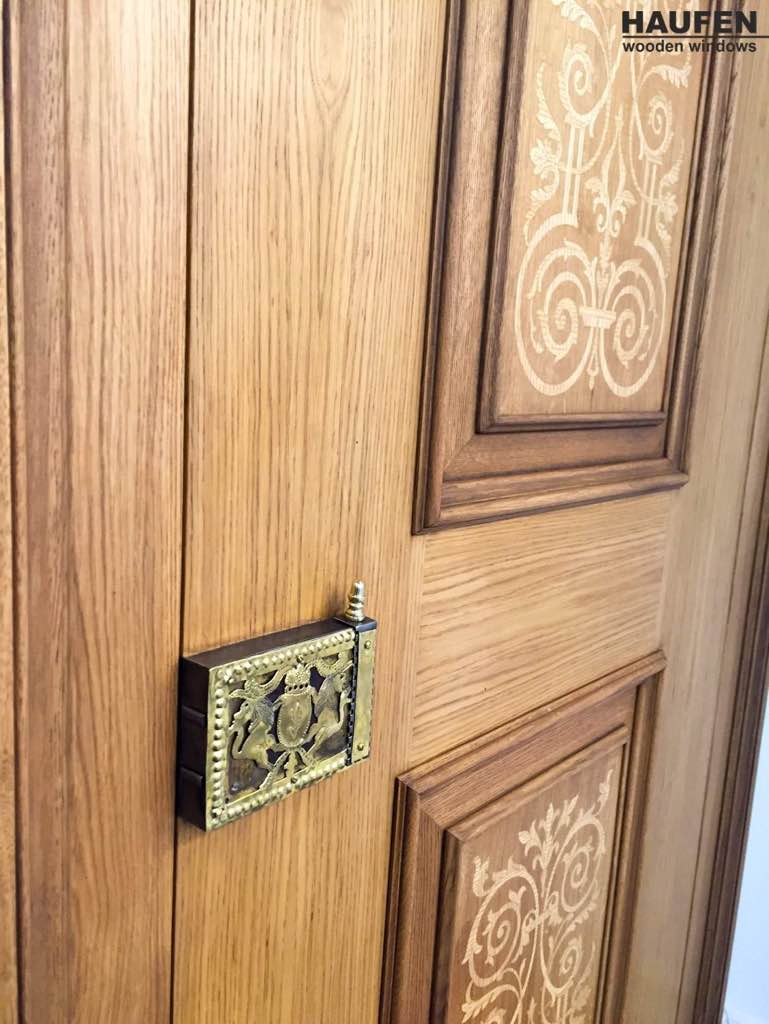
Wooden frames don’t just convey a higher level of aesthetics. They perform properly only when their maintenance is treated as part of the overall performance of the building envelope, not as an occasional care task. Airtightness, thermal insulation, smooth operation of the hardware, and preservation of the finish all depend on consistent inspections and timely interventions before deterioration reaches an advanced stage.
In quality HAUFEN® wooden systems, durability over time is guaranteed only when combined with proper use, proper installation, and technically sound monitoring. This is especially true in high-demand residences, coastal locations, areas with intense sunlight, or projects where the frame is an essential architectural element.
What Proper Maintenance of Wooden Frames Means
Maintenance is not limited to simply cleaning the wooden surface. It includes checking the varnish or paint, assessing the condition of the sealing gaskets, inspecting the drip edges and joints, and adjusting the hardware where needed. If any of these is neglected, the problem doesn’t stay aesthetic — it very often transfers to the frame’s operation and ultimately to its energy performance.
A high-specification wooden window or balcony door is a complex structural element. The wood, finish, hardware, glazing, and installation function as a unified system. This is why maintenance must evaluate the whole, not just the surface in isolation.
The Key Factors That Affect Deterioration
Sun exposure is one of the most significant factors. South- and west-facing elevations are more heavily affected, especially when the frames are a dark tone or lack adequate shading. UV radiation stresses the finish, and if not addressed in time, allows moisture to gradually affect the exterior wood surface.
Moisture behaves differently depending on the environment. In mountainous areas the problem is often linked to rain, snow, and low temperatures. In coastal homes, salinity is added to the mix, placing greater strain on metal components and requiring more frequent inspection. In urban properties with high pollution levels, residue on frame surfaces can shorten the life of the protective film if not cleaned properly.
Usage also plays a role. A frame that opens and closes many times a day — such as in a home with large balcony doors or in hospitality projects — has different demands than a window with limited use. In those cases, the hardware and adjustments need more frequent evaluation.
When an Inspection Is Needed
In practice, a basic visual inspection twice a year is a safe approach. The ideal periods are after winter and before the intense summer stress. The goal is not only to identify obvious damage, but also the early signs that the finish is losing its integrity or that a mechanism is beginning to work under strain.
The most common areas worth observing are: changes in gloss or color, micro-cracks in the varnish, difficulty closing, traces of moisture at joints, and reduced elasticity in the gaskets. Not all of these mean immediate damage — but they do mean that the stage is approaching where preventive care is far more economical and technically effective than an extensive restoration.
Cleaning and Everyday Care
Proper cleaning is simple, but not trivial. The surface should be wiped with a soft cloth and a mild detergent, without abrasive materials, strong solvents, or products that leave residue. The principle is to remove dust, salt, and pollutants without damaging the protective layer.
Particular attention is needed at the lower horizontal points, where water and debris accumulate, as well as at the drainage channels. If the water drainage paths become blocked, even a perfectly constructed frame will be put under more stress than its design anticipates.
Hardware doesn’t require excess. In some cases, a periodic check and the application of an appropriate lubricant at the points specified by the manufacturer is sufficient. The arbitrary use of unsuitable materials can attract dust or affect the long-term performance of the components.
Finish, Painting, and Wood Protection
The most critical parameter in the long-term behavior of a wooden frame is the condition of the finish. Varnish or paint doesn’t just serve an aesthetic purpose — it is the first line of defense against solar radiation, moisture, and the expansion and contraction that come with outdoor exposure.
When the surface remains uniform, sealed, and free of local failures, the wood is effectively protected. But when peeling, dullness, localized degradation, or areas where water no longer repels properly appear, the issue is no longer aesthetic — it is technical.
There is no single fixed answer for when the finish needs to be renewed. It depends on the species of wood, the coating system, the orientation, and the exposure of the project. On sheltered elevations the interval can be significantly longer. On heavily exposed surfaces, the need may arise sooner. The right approach is to renew the protective system before the deterioration reaches the wood itself.
Hardware and Airtightness
A wooden frame can look excellent on the outside and still require technical intervention on its hardware. If the sash is catching on the frame, if closing requires pressure, or if drafts around the frame become noticeable, an inspection is needed. Very often the issue is an adjustment rather than serious damage — provided it is addressed in time.
Sealing gaskets must also maintain their elasticity and proper contact. When they harden or wear out, airtightness decreases and both interior comfort and the frame’s energy performance can be affected. In homes where thermal insulation and noise reduction are priorities, this detail carries more weight than is often appreciated.
When Prevention Is Enough and When a Technician Is Needed
If the surface only needs cleaning, the drainage channels are clear, and there are no signs of finish deterioration, routine periodic care is sufficient. But when cracks appear in the paint, difficulty in operation arises, traces of moisture are found inside, or uneven sash seating is noticed, a technical assessment should come first.
The DIY approach has its limits, especially with high-specification frames. A hasty local repair may temporarily conceal the problem but create incompatibilities in the finish or delay a necessary intervention. In premium constructions, the precision of the work is just as important as the quality of the original product.
Maintenance as an Investment in Property Value
Maintaining wooden frames is not only about the lifespan of a material. It directly affects the appearance of the property, day-to-day comfort, and the preservation of the project’s architectural coherence. In a high-aesthetic single-family home or a demanding renovation, the frames are not a secondary element — they define the quality of the experience and the perceived value of the entire building envelope.
This is why maintenance should not begin when deterioration becomes visible from a distance. It begins much earlier, with proper inspection, technical discipline, and respect for the material. This is also the philosophy followed by manufacturers with deep specialization in wood, such as HAUFEN®, where long-term performance is treated as an inseparable part of construction quality.
The more demanding the project, the less room there is for neglect. A well-maintained wooden frame doesn’t just protect the opening — it protects the investment, the aesthetic integrity, and the value you want your property to retain over time.