
Wooden Frames for Renovation
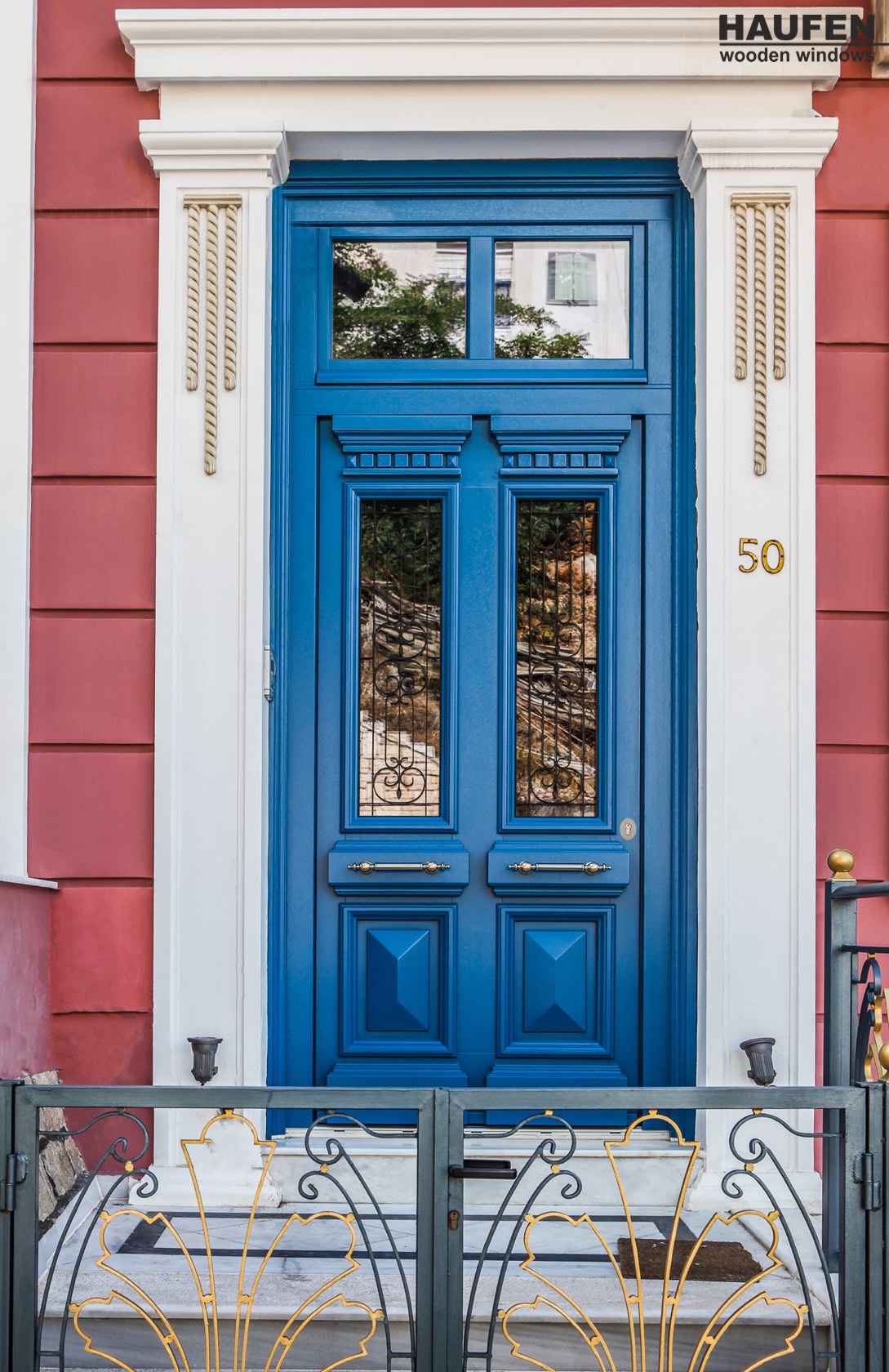
In a renovation, the window and door frame is not a simple final choice. It is an element that affects the appearance of the building, its thermal behavior, its weatherproofing, and ultimately the way it is lived in. This is why wooden frames for renovation require a different approach than a conventional new construction project.
When it comes to older homes, listed buildings, or structures with a strong architectural character, the goal is not merely for the new frames to “match” visually. The real objective is to faithfully render the history of the building without sacrificing modern requirements such as thermal insulation, soundproofing, security, and everyday functionality.
Why Wooden Frames Are the Right Foundation in Renovation
Wood has an advantage that is difficult to replicate with other materials. It can accurately reproduce the proportions, cross-sections, panels, profiles, and details that an older building demands, without looking foreign to its architectural identity.
This matters especially in homes with traditional features, high-aesthetic urban renovations, or historic buildings where the appearance of the façade is an inseparable part of the property’s value. An unsuitable frame can immediately distort the character of a building. A carefully designed wooden frame, on the other hand, restores its coherence.
There is also the technical side. Modern wooden frames bear no resemblance to older notions of low durability or limited performance. When construction is based on proper timber, advanced processing, quality glazing, and correct installation, the result can meet exceptionally high standards.
Wooden Frames for Renovation and Architectural Fidelity
In a renovation project, fidelity does not mean simple copying. It means understanding the morphology and translating it into a frame that functions flawlessly today. This distinction is critical.
It is often required to preserve the original lines, the slender face of the sashes, the subdivisions, or the traditional opening systems. However, the old frame, as it was built decades ago, typically cannot meet modern requirements for weathertightness, air permeability, and safety. This is where expertise is needed, not improvisation.
A proper study begins with a survey. The dimensions of the opening are examined, along with the tolerances of the masonry, the original frame design, the wall thickness, the particularities of the façade, and the relationship of the new frame to the plasterwork, marble sills, or stone cornices. On high-demand projects, the frame is not chosen from a catalogue. It is designed around the project.
The Detail That Sets a Quality Result Apart
Quality in renovation shows where no one usually looks at first glance — in the correct cross-section of the frame, the cleanness of the joints, the precision of the seam, the feel of the sash as it opens and closes, the consistent application of the finish, and the balance between an old-world style and modern performance.
This attention to detail is what distinguishes a superior frame from a solution that merely imitates the traditional.
What to Look for When Choosing
The selection of wooden frames for renovation is not judged by a single characteristic. It is a combination of aesthetics, technical performance, and manufacturing consistency.
First, the timber is examined. The species of wood, the quality of selection, the drying process, and the overall treatment affect the frame’s stability over time. In areas with intense humidity, coastal environments, or strong sunlight, the right raw material and appropriate finish carry even greater weight.
Next comes the profile construction. The thickness, chambers, sealing gaskets, hardware, and capacity to accommodate energy-efficient glazing units largely determine the frame’s real-world behavior. A beautiful design that does not protect against wind, moisture, and heat loss does not properly serve the project.
The same applies to the glazing. In many renovations there is a temptation to prefer thinner or simpler solutions purely to maintain an “old” appearance. However, this must be considered carefully. The energy performance of a building improves substantially when the frame and the glazing unit work as a unified system.
The Balance Between Tradition and Performance
This is where the most interesting point of any renovation lies. How far can fidelity to the original design go without sacrificing the performance that a modern building requires?
The answer is that it depends on the property itself and on the project’s objective. In a strictly listed building, there may be restrictions on cross-sections, colors, or the way the sashes operate. In a private residence being renovated with respect for the original architecture, there is usually greater freedom to integrate modern technical features more effectively.
The right choice is not always the completely “old” one — nor, of course, the excessively modern one that looks out of place. The value lies in a considered balance. A frame can preserve the character of the building’s era while simultaneously offering high thermal insulation, reliable weatherproofing, and enhanced security.
Installation Is Part of the Construction
In renovations, installation is not a secondary stage. It is a critical part of the final result. Openings in older buildings often present deviations, deterioration, settlement, or asymmetries not found in new construction.
If installation is carried out with the logic of standardized replacement, the result can be problematic even with an excellent product. Proper seating, joint management, moisture protection, and adaptation to the actual conditions of the masonry are all factors that directly affect the lifespan and performance of the frame.
For this reason, on high-value projects, unified responsibility from design through to installation offers a real advantage. It reduces failures and ensures that the final result meets the original intent.
Cost, Maintenance, and Real Value
Wooden frames for renovation belong, reasonably, in a demanding project category. They are not the lowest upfront cost option. They are, however, a choice that significantly influences the architectural quality and the value of the property over time.
In a premium residence or a building with a distinctive identity, the frame is not treated as a simple commodity. It is part of the investment. It affects the appearance, the comfort, the functionality, and the overall sense of quality in everyday use.
As for maintenance, a realistic approach is needed. Wood is a natural material and requires care proportional to its exposure and environment. This is not a disadvantage when it has been properly accounted for from the outset. With appropriate treatment, quality finishing, and solid technical support, maintenance becomes controlled and entirely manageable.
When a Solution Is Truly Right for Your Project
The right solution is not the one that merely looks impressive as a sample. It is the one that stands convincingly within the specific building — one that respects its architecture, improves the quality of living, and endures over time without compromising on aesthetics.
This means that before any choice is made, certain essential questions must be answered. What is the character of the property? What are the actual climatic conditions? What requirements exist regarding thermal insulation, soundproofing, and security? Are there morphological or planning restrictions? And above all, what level of quality do you want the project to express as a whole?
Companies with deep specialization in wood, such as HAUFEN®, have value precisely because they can handle this complex equation without oversimplifying it. In a renovation, experience is not a decorative credential. It is a prerequisite for getting things right from the start.
A good frame in an old building does not necessarily draw attention. It gives, however, the feeling that everything is in its place — as it should have been from the very beginning.