
How wooden windows improve sealing
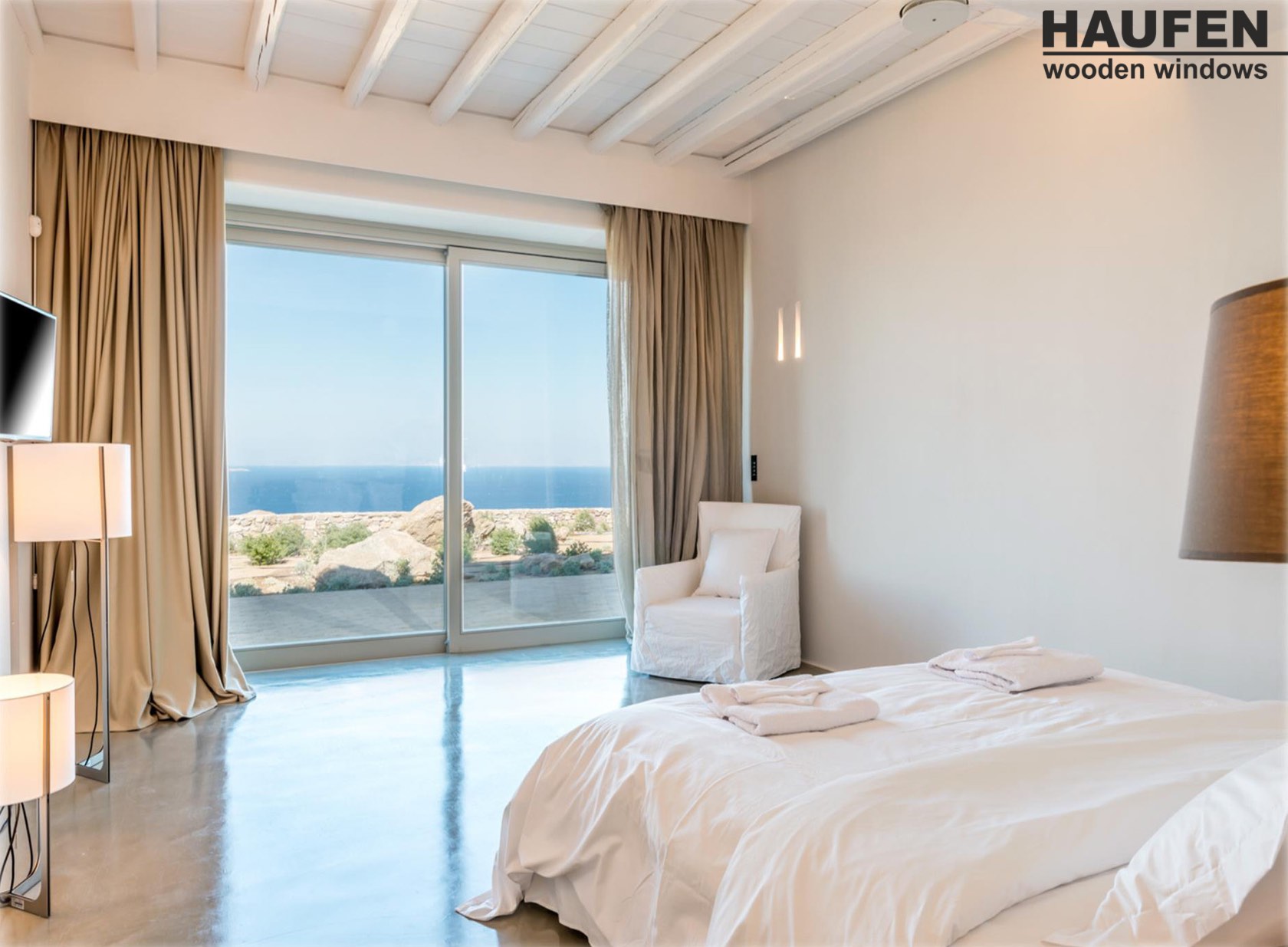
When drafts, moisture at perimeter points, or noise passing through more easily than it should appear in a residence, the issue is not simply one of comfort. It is a sign that the frame is not sealing properly. At this point it is important to look at how wooden windows improve sealing performance and why, when built to high specifications, they can offer exceptionally stable performance against air, rain, and heat loss.
Sealing is not a single characteristic. It is the result of design, material quality, proper workmanship, appropriate hardware, and carefully planned installation. In quality wooden frames, all of these work in combination. That is why their real performance is judged not only by appearance or frame thickness, but by the overall construction logic.
How wooden windows improve sealing in practice Wood, as a high-density material with natural insulating capacity, creates a strong foundation for airtight construction from the outset. That alone, however, is not enough. The difference comes when the wooden window is designed with precision in its joints, with proper cross-sections, and with modern perimeter sealing systems.
In advanced systems, the sash fits against the frame in such a way as to limit uncontrolled air infiltration. Perimeter rubber seals, when they are of high quality and correctly fitted, ensure uniform contact along the entire length of the frame. This reduces leakage points, even when the opening is large or heavily exposed to weather.
Equally important is the stability of the timber. Carefully selected, properly processed, and kiln-dried timber behaves predictably over time. It does not easily warp in ways that would compromise the fit between sash and frame. This is critical, because sealing is typically lost not because of the material itself, but due to deformation, poor joinery, and low construction quality.
The importance of manufacturing precision In a premium wooden window, sealing begins in the workshop. Precise cuts, correct corner joints, and dimensional consistency allow the frame to function as a unified system rather than a collection of independent components. The smaller the production tolerances, the better the fit of individual elements.
This has a direct effect on the contact pressure developed when the window closes. If pressure is evenly distributed, the rubber seals function efficiently without being overstressed. Conversely, when there are irregularities, some points are over-compressed while others remain loose. That is where problems with air, water, and premature wear begin.
Craftsmanship in timber processing also plays an essential role. Wood is a noble material, but it demands expertise. It requires the right species selection, controlled moisture content, consistent production processes, and a finish that protects the surface without impeding its natural behaviour. When these are observed, the result is a frame with a long service life and consistent sealing performance.
Seals, hardware, and locking points Discussions about wooden windows often focus on their aesthetics, yet sealing depends to a large extent on components that do not immediately catch the eye. Perimeter rubber seals, tilt-and-turn or casement hardware, and multiple locking points determine how firmly and uniformly the sash presses against the frame.
A window with the right hardware does not simply close. It seals. The difference is substantial, especially in areas with strong winds, coastal environments, or heavy rain exposure. Multiple locking points improve the consistency of contact around the entire perimeter and reduce the likelihood of the sash developing tolerances over time.
There is also an important balance to consider here. Very firm pressure does not always mean better sealing. If the system is poorly adjusted, it can stress the seals and hardware, leading to premature wear. The quality solution is precise adjustment, not excess.
The role of the glazing unit and overall cross-section Sealing in a frame is not only about its perimeter closure. It is also connected to how the glazing unit is incorporated into the sash. Double or triple energy-efficient glazing units, when correctly installed with appropriate gaskets and proper bedding, contribute to overall airtightness and moisture protection.
At the same time, the cross-section of the wooden profile affects both mechanical rigidity and the frame’s behaviour under real-world conditions. A larger, well-engineered cross-section can offer better stiffness, which is particularly useful in large openings. This does not mean that every more substantial construction is automatically better. Effectiveness depends on the right combination of design, glazing, hardware, and timber.
Installation is part of the sealing Even the best-made wooden frame may not perform as expected if it is not installed correctly. The connection between the frame and the masonry is one of the most critical points for the airtightness and watertightness of the whole assembly. That is often where the greatest losses occur — not in the window itself.
Correct installation requires precise levelling, secure fixing, appropriate sealing materials, and attention to perimeter tolerances around the frame. Without these, gaps can form that allow air or water infiltration, even if the sash and frame themselves function perfectly.
Particularly in demanding projects or renovations of older buildings, installation requires experience and an understanding of the specific characteristics of the building envelope. Masonry irregularities, settlement, or contact points with marble and cladding can noticeably affect the final result. For this reason, sealing must be treated as a subject of overall design and not as a last-minute detail.
Maintenance and long-term performance One of the most common questions surrounding wooden frames concerns whether they maintain their sealing performance over time. The answer is yes, provided they are properly constructed systems and that the recommended care is followed. Modern finishing and timber protection technology has significantly improved the durability and stability of exterior wooden windows.
Periodic inspection of seals, hardware adjustments, and the surface condition of the finish helps maintain original performance without unpleasant surprises. It is not a demanding process, but the logical upkeep that corresponds to a high-value frame. In return, the user enjoys consistent operation, aesthetic integrity, and a high level of protection for many years.
Why wooden frames stand out in demanding projects In premium-aesthetic residences, holiday homes with intense exposure, and renovations where architectural consistency is as important as technical performance, wooden windows offer an advantage that is difficult to replicate. They combine high sealing performance and construction quality that integrates naturally into the architecture.
They are not the right choice for anyone simply seeking the lowest initial outlay. They are, however, an excellent choice for anyone who evaluates the window frame as an integral part of the building envelope, energy performance, and overall property value. In this context, investing in the right wooden construction pays off not only in comfort and performance, but in lasting value.
HAUFEN® approaches sealing with precisely this logic: as the result of technical consistency at every stage, from timber selection through to final installation. For the homeowner or professional who does not compromise with standardised solutions, this is what makes the difference in practice.
Ultimately, the sealing of a wooden frame is not a catalogue promise. It is a measurable quality that shows itself every day, in the way a space remains quiet, protected, and stable regardless of the weather.